There’s a lot of noise right now about AI and design.
Generative tools. Workflow acceleration. Automation of craft. Entire interfaces produced from prompts.
Alongside that, I’ve noticed something else, a deeper conversation emerging from people I respect about culture, brand and meaning. Voices like Jasmine Bina and Nicolas Roope aren’t just talking about technology. They’re talking about what happens when everything becomes easy to produce.
That’s the part I’m interested in.
Because if everything becomes easier to make, what becomes harder, and more valuable, is making something that matters.
UX in a world that won’t wait
The uncomfortable reality is that our traditional design rhythms were built for a slower world.
Multi-year transformation programmes. Endless discovery phases. Perfectly documented journeys. Layer upon layer of validation before anything meaningful is put in front of the business.
Meanwhile, markets are shifting in quarters. Customer expectations evolve in months. AI compresses production from weeks into hours.
By the time some products launch, they’re already behind.
This doesn’t make UX irrelevant. It makes focus essential.
The value of UX was never the volume of artefacts or the length of the process. It was our ability to understand people deeply and translate that understanding into experiences that move them.
If the world is moving faster, then our discipline has to learn how to do more with less:
Less theatre
Less over-documentation
Less attachment to rigid sequencing
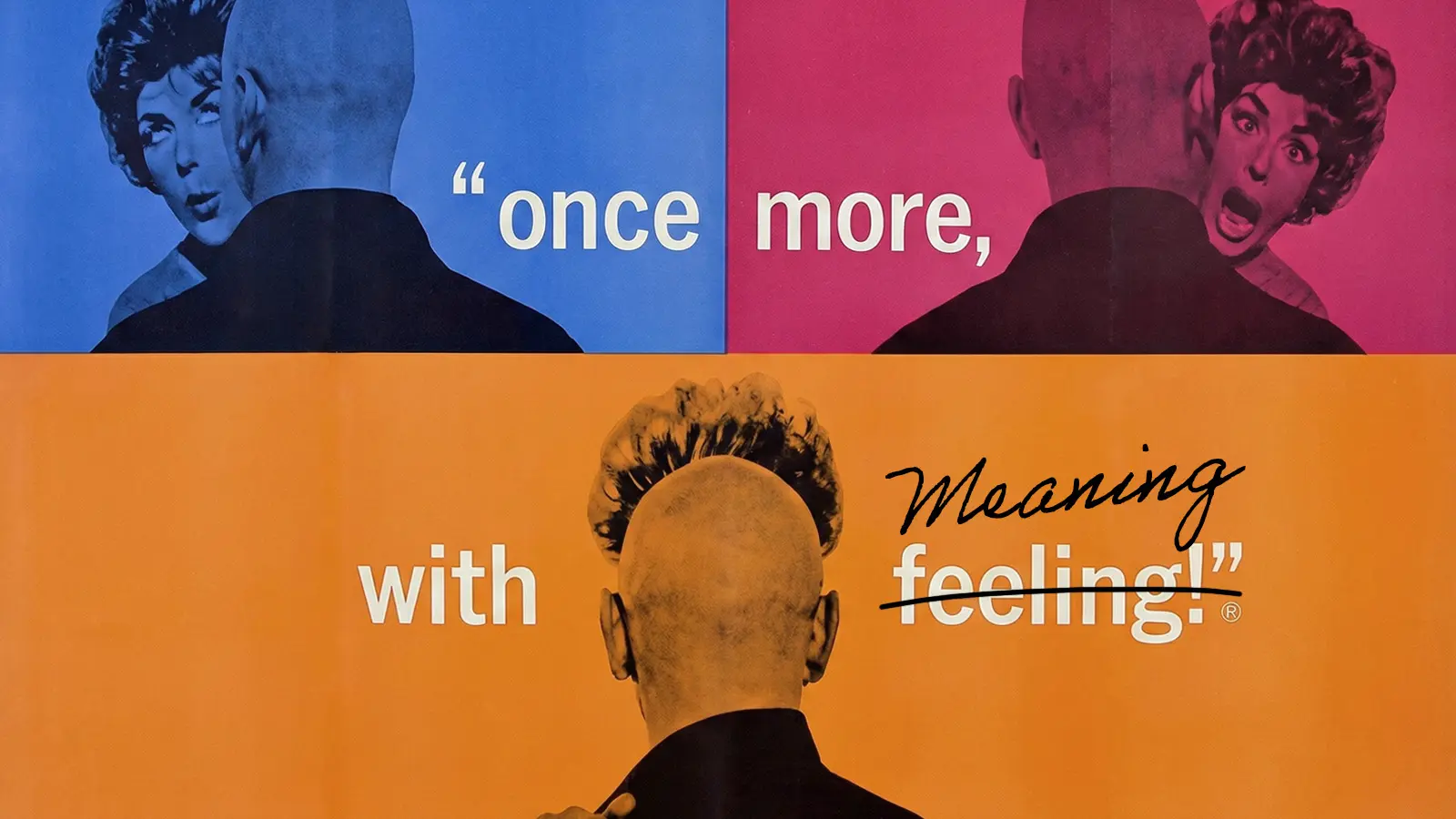
And more emphasis on what actually changes behaviour - meaning.
As Bina has written, when culture loses its dominant story, people start experimenting with meaning. AI is accelerating production, but it’s also destabilising certainty. In that vacuum, meaning becomes strategic.
That’s not a threat to UX.
It’s a call to sharpen it.
When usable isn’t memorable
One risk in this moment is confusing optimisation with differentiation.
AI can already generate clean layouts, decent hierarchies and well-structured flows. It can produce “good” very cheaply.
But good is not the same as distinctive.
At Toyota, we’ve seen it repeatedly in research: products that test as usable, logical, even efficient… and yet leave no emotional trace. Perfectly usable. Completely forgettable.
And that’s dangerous in crowded markets.
There’s a reason Simon Sinek’s work resonated so widely. His core idea, that people don’t buy what you do, they buy why you do it, aligns with what neuroscience has been telling us for years: decision-making is driven by emotion first, justification second.
If AI flattens functional quality, then emotional clarity becomes the advantage.
Brand.
Belief.
Voice.
Taste.
Point of view.
These are harder to automate.
As Roope noted when discussing AI-generated imagery, when everyone can produce high-quality visuals, differentiation shifts away from production value and toward distinctiveness.
That same shift is happening in product design.
The return of conviction
There’s another shift I suspect we’ll see.
Before UX matured into the discipline it is today, many products were driven by strong creative conviction. Sometimes too much ego, not enough evidence. The UX movement rightly corrected that.
But in doing so, parts of our industry drifted toward risk-avoidance. Toward needing every data point before daring to propose something tangible.
Yet we know something important from user research: people respond better to something concrete than to abstract questioning. Put a prototype in front of a customer and the quality of insight improves dramatically.
The same is true internally.
Business leaders respond better to something they can see, react to, debate and reshape than to a 60-page strategy deck.
In an AI-accelerated world, the designers who can synthesise quickly - who can put a compelling, emotionally resonant proof of concept in front of stakeholders early - will be invaluable.
Not because research doesn’t matter.
But because momentum matters.
AI can help us get to first expression faster. It can amplify exploration. It can remove friction from production.
But it should support conviction, not replace it.
If a human can create something with stronger emotional intent, faster, we shouldn’t slow them down for the sake of process purity.
Adapt tightly to purpose, loosely to method
Recently, Steven Bartlett described the future belonging to “unromantic adapters”. Those who hold tightly to what they’re trying to achieve, and loosely to how they achieve it.
That feels right for UX.
Hold tightly to:
- Creating products people care about
- Designing experiences that build connection
- Driving commercial impact
Hold loosely to:
- Our favourite frameworks
- The comfort of long cycles
- The idea that rigour equals duration
AI is not the enemy of UX.
But it is exposing where we’ve confused process with value.
If everyone can generate competent interfaces, then our competitive edge won’t be wireframes or journey maps.
It will be whether we can help organisations create experiences that feel meaningful in a world drowning in output.
Because in the end, customers won’t remember how efficient our process was.
They’ll remember how we made them feel.
Written by